Monday, September 8, 2014

Decoding Hamlet in 3 Questions: Part 2.5 (Favorites 02: 04)

Picking up where we left off last time, in a character-by-character study of the question:

Question Two: What is the difference between behavior and character?
We now move on to another case as ambiguous as Hamlet's.


LAERTES, son to Polonius

While he is away, his father is killed, and afterwards the death is hushed up, and not treated with the honor and attention Laertes feels his father deserved.  He can plainly see that something is going very wrong in the kingdom, and vows vengeance at any cost, to find the person responsible and do whatever is necessary, up to and including sacrificing his own salvation, to see that what's right is done.

The twist here is that the man responsible is, of course, Hamlet, and the reason his father was killed was that the same thing happened already.  Can you imagine if Laertes accidentally slew a third young man's dad, and required another vendetta on top of everything else?


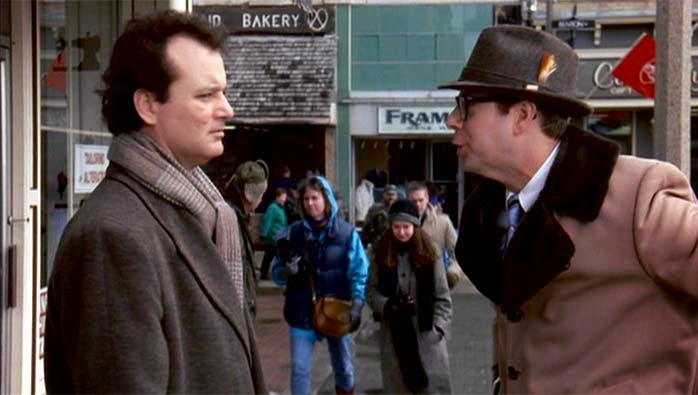
"Just kill me."
"I am killing you."
image copyright Warner Home Entertainment
The set-up is familiar, but where's the questioning?  Where's the endless back-and-forth considering of motive and searching for justification of his action?  

Why, in short, with the same problem to solve as Hamlet, does Laertes not act the way that Hamlet acts?  

Not once but twice in the play (both in the last scene, Act V, Scene ii), Hamlet points out their similarities and differences, and the unfortunate nature of the circumstances that compel them to be enemies, and ultimately one another's cause of death (unless you count Claudius, of course).

When I think of Laertes, I think of Billy Costigan from The Departed (2006).  Here's a kid who's hell bent on doing the right thing, unaware of the encircling ironies of the plot towards which he's winding himself further and further towards the center.  He winds up losing everything and accomplishing -- what?  Everything or nothing, depending on how you look at it.

Going somewhat out of order, I'll next address

VOLTEMAND, a courtier,
CORNELIUS, a courtier,

OSRIC, a courtier, and
GENTLEMAN, a courtier

at the same time.


"Your inside is out, and your outside is in
Your outside is in, and your inside is out"
image copyright Home Box Office (HBO)
These are the men who make the kingdom, or at least the court, what it is.  All the pomp, all the praise and vows of fidelity come first and foremost from these guys, those who are in receipt of the King's favor.

They would do anything for the King, for the Crown, for Denmark.  Anything at all, that is, that will tend to their greater advancement and advantage. 

They're possibly the most straightforward example of two-facedness in the story, as they're a class we meet and deal with every day: those who pretend to be our friends so that they 

They're also largely the men who advance the peripheral plot of the story: encouraging Claudius in his glory, carrying messages to and from their rival kingdom Norway, which are little heeded, and unwittingly helping choreograph their court's ultimate downfall.

How do we know they aren't really devoted to the crown, to the well being of the kingdom?

How quickly did they abandon the memory of the old king in favor of the new one, as soon as they saw who would be able to do the most for them?

But they're understandable enough.  What's worse is when it's someone you thought you could trust, 

ROSENCRANTZ & GUILDENSTERN, courtiers

Consider Horatio compared to these two.  We first meet them in council with the King and Queen, who have summoned and are hiring them to spy on Hamlet, their friend, in order for the King and Queen (read: just the King) to figure out what's really going on, and whether Hamlet is a threat.


"Is it possible, even conceivable, that you've confused me with that gang of backward children you play tricks on, that you have the same contempt for me as you have for them?" -Addison DeWitt, All About Eve (1950)
image copyright Twentieth Century Fox
I say "hire" instead of "order" or "charge" them for this job because these two don't carry it out like people who have been asked to do a thing and expect nothing in return, or who are reluctant to do what they've been told even though it hurts their friend.

The moment they see themselves on the fast track to the favor of the King and Queen, and all the good that can do for them personally, they plunge into the royal service until it's far, far over their heads.

Hamlet suspects them from the first, and is only barely able to pry the truth out of them, in their first interview, by a direct appeal to their love as his friends.  They reluctantly confess that they were sent for, and from this point on Hamlet refuses to trust them.  Their friendship does not improve.

Rosencrantz and Guildenstern are curious characters.  More than the other courtiers they become the King's personal gofers, ultimately helping carry Hamlet off to attempted execution at the hands of the court of England.  The tables are turned on them, and they are killed off stage almost as an afterthought.

They seem to exist solely to deepen the impression that everyone Hamlet knows is against him, and every social interaction is a two-sided affair.

Then come three worthy enough fellows,

MARCELLUS, an officer
BARNARDO, an officer
FRANCISCO, a soldier


Their time on stage is brief, and they could be considered offshoots of Horatio's trustworthiness; existing primarily to both ground and buoy the early scenes and the revelation of the Ghost.

You don't have to be big or important to do big important work in a story.image copyright Disney/Pixar
Not two-sided by any standard, so they also don't fit into my reckoning; they also have so little to do in the story 

Two points worth noting however: first, as noted in the previous post, the point these characters exist in order to bring to life, namely the existence and testimony of the Ghost, is by the end of the play no longer a settled matter, and like everything else has been turned inside out and questioned as thoroughly as it was originally made solid and understandable by their initial testimony

Second, as soon as the Ghost is heard and departs, and their job in the story is completed, Hamlet commands them to swear by his sword never to reveal what they have there seen and heard: in effect, he is ordering them to disobey their orders to the crown to be vigilant and to report what they see to the other guards and the crown.  It has little enough to do with the rest of the story at first glance, but consider: if these guards had gone to Claudius and not Horatio, or Hamlet, with the news of the ghost of the king that is dead at the play's start, things would have worked out differently indeed...

To work through small parts with some brevity (sorry no pictures):

REYNALDO, servant to Polonius

He listens to the old counselor's instructions carefully, but seems to feel the old man is a little off.  These instructions?  To tell everyone he meets that Laertes is a lousy guy (drinks too much, hunts too much, loses money gambling, goes to brothels) in order to be contradicted or agreed with.  Use lies to find the truth.  How well do you think that goes for Laertes?

Then there's

FORTINBRAS, Prince of Norway

He claims to be leading his troops peacefully through Denmark in order to get somewhere else.  Claudius buys it, and raises no objection (he's too busy to read the letter from the King of Norway in full, instead he promises the messengers that they'll feast together later that night), and Fortinbras promptly invades and takes the kingdom over.

Hamlet asks the 


NORWEGIAN CAPTAIN
where all these soldiers are going: the captain tells him everything about their plans, fighting over a small patch of land that's not worth the struggle, without revealing the truth: Denmark, namely Elsinore castle.  Hamlet is encouraged by the mental image of soldiers marching boldly to die for a patch of land not big enough to house them all were it their graveyard, and resolves to make his revenge no matter what (he then gets on a ship to sail to another country).

Then there's a


DOCTOR OF DIVINITY


He might be hard to remember, he argues with Laertes over his sister's grave, insisting that it would be immoral to do anything further to consecrate her grave.  This essentially denies her Christian salvation, at least in part, because she was so grieved by her father's death that she went nuts, then died accidentally, maybe, by falling into water and not swimming out.  I leave this to your interpretation; but aren't mercy or pity parts of the ethos of following Christ?  Oh well.

Once again I'm out of time on this post!

To be concluded in part three of this point, I suppose.  Series within series within series...

Thanks for reading as always.

Friday, September 5, 2014

Story: Out of the Trashlands - Part Four


The old man looked up in surprise.  I felt a little surprised myself -- why would it matter if I had ever killed anyone?  Of course I'd killed, everyone had.  What was the shock in that?

"Get out," said the old man at last.  "Get away from me.  You are both dismissed."

"Young man," Shimmy said, turning my way, "do you hate the Revs?"

I was surprised at the question.  I nodded.

"Speak up," said Shimmy sharply.

"Yes, I do," I said.

"Why do you hate them?" he asked.

I shrugged.  "They're Revs," I said without feeling.  When this seemed insufficient, I went on.  "They ruin everything.  They take what they want, they leave the mess behind.  They beat children, they ruin families, they burn towns and laugh.  They eat all the food and then leave, or worse, they settle in and steal the food, and make life horrible if you don't give them everything you have.  If they find something you love, they will ruin it just to see it ruined.  They are Revs," I said, as if this summed up everything else, because for me it did.  "They're the reason the world is so hard to live in."

"Why don't you kill the Revs," said Shimmy.  "Why don't you drive them away if they're so awful?"

"We do," I said.  "I've killed five.  But more come along and see that there are none in Our Town, and they stay.  If we have some around, it's safter than if we don't, these ones don't want to burn the place down, new ones might just do that and ride on."  I shrugged again.  "There are always more Revs."

"There are always more Revs," said Shimmy, nodding.

"Get out of here," the old man said, his voice rasping in an odd way.

"Do you know who this is?" Shimmy asked me.  I shook my head.  "Speak up," he reminded me.

"I don't," I said.

"This," said Shimmy, "you could say, is the God and Emporer of all the Revs in the world."

"Get out," rasped the old man.

"This is the man who started it all," said Shimmy, letting go my arm, which I didn't like, in order to gesture grandly to the old man like they were having a play.  "This is the Rev who came first, or at least he's the last of his kind living now.  The last representative of the once-great Kings of the Revs."

"He doesn't look like a Rev," I said, because I couldn't understand what Shimmy was saying.

"Get out!" rasped the old man.

"Do you know," said Shimmy, "why the world is full of trash?"

"You mean the Trashlands?" I asked.

"I mean everywhere," said Shimmy.  "The heat in the sky, the stink in the earth.  How hard you have to dig to get to good, black earth that will grow things."

"You mean the fall of man?" I asked, bewildered.

"Get out!" rasped the old man.

"You can call it that," said Shimmy.  "I mean the way the world is today."

I shrugged.  "The old ones made the world this way," I said, repeating what everybody else said about it.  "We didn't know any better, it just happened."  It was the sort of thing you say when people talk about how the world is.  "There's no use going on about how it used to be, we just have to move on."

"Get out," said the old man more softly, he seemed to be crying.  A wet spot was spreading in the middle of his sheets.

"They didn't know any better," said Shimmy softly.  The old man was sobbing in the silence.

I shrugged again.  The old man kept crying.  The awful silence went on.

At last Shimmy raised a pointing finger.

"He knew better," he said.  The old man was curling up into a ball.  "He knew just what would happen, and he kept taking and eating and leaving his waste anyway.  When the world fell apart, he hid here in his tower.  When the people saw the world falling apart, and went running to bring the ones who had ruined it to judgment, they found him already gone, already dead, or it seemed.  He hid himself from their justice, hid until everyone who could remember how the world was before was mad or dead or dying.

"And I," Shimmy said, his voice trembling, "helped him hide.  I brought him supplies when he came here.  I told them he was gone when they came looking again, and they believed me and they left.  But not without my family, they took them along when they went, and I wasn't there to save them because I was here, helping him.  He was my boss, I was his helper."

Tears came out from between Shimmy's pinched eyelids, and he covered his face.

"We thought we could outlive the end of the world," said Shimmy, weeping along with the old man.  "The world never ends, it just changes, and we're the ones who changed it."

I said nothing.  The old man had fallen quiet.  I was completely bewildered -- I'd only half understood what Shimmy had said.  None of it had anything to do with this room, this horribly high-up place, this old man, these humming machines.  I wanted nothing more than to just walk away, find my way back to my hole in Our Town, and go digging for worms.  The sun was down, night was falling.  I wondered if it were safe to sleep here.  I wondered if I would be able to get home again.

"And now," said Shimmy at last, growing calm again, "he now he wants to die.  He wants me to help him.  The last job."  He chuckled.  "Keep me alive.  Keep me from feeling pain.  Keep me from feeling all this guilt.  It's a well-paying job, right?"

"I don't understand," I said to Shimmy.  "Is this where you go every day?"

"The lifters sent me messages," he said.  "People in Trashland who needed help.  I know where to find food, I used to bring it to them and leave it where they'd find it.  That reminds me," he said. He fumbled in his pockets.  He drew out a folded wad of paper and handed it to me.  On it were a mess of lines and circles, with a large blotch in the center that had a heavy line along the lower edge.  "Follow that map," he said.  "I've been working on it for thirty years.  That's where all the emergency shelters I could find are hidden, they each have fifty years of rations inside.  Break one open, take what you can.  There are weapons there, take them too.  Walk until it's green.  Hide from the Revs at night, there are sub-shelters at all the Xs.  Find other people, start a real town.  Get out of this mess, kid."

I did not understand.  "You made this -- it's a map?" I said slowly.  "When do you come here, though?"

"I haven't been up here in years," Shimmy said.  "He hasn't called me.  He's had lifters -- automated servants, they were doing everything for him.  Now he's sent them away and doesn't want to die slowly."

"Real A student you've got there," said the old man bitterly.

"Smart enough to stay alive in that wasteland you made him," snapped back Shimmy.  "No schools in Trashland, even for the smart ones."  He turned back to me.  "Take it or leave it, the people have to learn to fend for themselves.  Just try to find one of the shelters one day, it can help you."

"I don't understand," I said.  "YOu're not coming back with me?"

"I think that now that the lifters aren't here," said Shimmy with an odd smile, "to chase me away when he wants, me and my old boss will have a nice long visit."

The old man made a choking noise.

"Are you two finished?" he rasped.  "If you're not going to leave, then I must insist you get this over with."

Shimmy rose from his knees.  He drew the large knife out of his pocket, handed it to me, and gestured grandly at the bed again.

"He's all yours," he said.  He added solemnly, "For your father, your mother, brothers and sisters, and your children.  This is the man who is responsible for your world.  Do what must be done."

I stood, holding the knife, and tried to imagine what Shimmy was talking about.  This man, a Rev?  Maybe a very old one, who had got out of the circle of stealing and wrecking, and set himself up in a nice glossy tower, high above his mess.  Yes, I had known some Revs who would live as the old man seemed to if they could, once they were finished having fun.  I thought of the Rev who'd killed my Dad, God rest, and felt a terrible surge of anger course through me.  Here he was living while I dug in the dirt.  I thought about the knife.

But the anger passed as quickly as it had come, and I cooled.  I looked down at that absurdly large knife, and feeling a little silly.  What did this little old helpless man have to with my family?  The Revs had killed my father, not the old man.  And I'd killed the Rev that killed him, God rest.  It didn't make me feel any better, but it had to be done.  He might have killed me too if I hadn't.

When I'd found the nestlings, I had planned on eating them.  Then I realized that if I kept them, and fed them until they grew, and caged them before they could fly, I would have more and better to eat than small meat on scratchy bones.  Somehow as they'd started growing in the last week I'd forgotten about looking forward to eating them, and just wanted to keep them safe.  The world had a way of forgetting the old hurts, when it still had a way to make itself new.  And if today was any lesson, it was that the world was always new, if you walked far enough.

What did it mean to say the whole world was different because of this little old man?  The world was so much larger today than it had been yesterday, it was all different even now.  There were still cities, and a railroad, and all these things... it was dark and dangerous and would kill me in the end, but it was my world.  Killing this old man wouldn't change the way it was.

"I wish my Dad were here, God rest," I said after a long while.

"So he could see you avenge him?" Shimmy prompted.

I shook my head.  "He used to tell me about the way things used to be, the trees that used to be everywhere, the places full of books to read, the clean rivers you could drink from, the railroads."  I smiled at the memory.  "I loved my father, but he was a very angry man.

"Whenever he talked about the way things used to be, he seemed to get angry at how it is now, at what happened to it to make it the way it is now.  He used to say it was all their fault, but I didn't know who he was talking about.  It was like there had been a big game, his side against another, and they had lost to the other side, and because of that the world was ruined.  I never really understood that," I said.  "Because if the other side thought the same thing, then that means they won, and the world turned out this way.  Who would want to get rid of all those wonderful things?  Who would want there to be a Trashland, full of things to fall into and get sick?  It's a silly way of looking at the world, playing against another side when the only way to win is to lose.

"People say it happened the way it did," I said, "because people didn't know any better.  I think that's probably true.  At least, if this old man here knew about it, he probably didn't think it would be this bad, or stay this way forever, or maybe he did but he thought people would make it through.  I don't know.  I know they have, although it's harder now, and I think he should try living with Revs instead of in this glossy tower without walls.  But I don't think he thought it would stay this way, even when he saw it changing.

"But it won't stay this way forever, it can't.  Just like it couldn't stay good forever.  It will always change.  Killing him now wont' make any difference.  What would make a difference is cleaning the mess up.  I didn't know it could be cleaned, not as much as I've seen today.  If there can still be Cities, there can be cities again.

"I wish my Dad were here, God rest," I said, "because I think if he could meet this old man here, he wouldn't want to blame him for the world anymore.  Blaming someone else for the way things are always seems like a weakness to me, like asking someone else for water instead of carrying your own.  I think meeting this old man would have made him a little stronger."

I was finished.  I don't know if what I said was just like that, but it felt about the same.  I was very tired, and very confused, and wanted to go home.  I put down the knife, and moved back to the wall to lean and rest, and to look at the books.

"Well," said Shimmy after a long silence.  "Do you hear that, Mr. Horn?  Your sins are forgiven, you may rest in peace."

"Filth," choked the old man in the bed.  "If he won't do it, you've got to."

"Come on," said Shimmy, joining me at the wall.  "We're leaving."

The old man said Shimmy's name, but we didn't hear him.  He said it louder.  We inched along the wall.  He started shouting it, his voice creaking and breaking from the horrible, soft, blinded bed.  On the way, Shimmy paused, pulled a book free, and handed it to me.

"Exit," he said.  I wasn't going to take one, but I was glad he'd done it, as there were so many and they were so clean looking.

Outside the door, I felt better.  Shimmy closed it against the screaming, and then shocked me by bringing his elbow down hard on the little buzzing screen beside the door.

"God rest," he said, and we went to the stairs.

He helped me back to the train in the dark.  I was less wary of the shadows somehow, now that I knew it was night outside and inside that helped.  The breeze on the train was still cool, and the long dead lands were very beautiful under the moonlight.

When we reached the little roof, I got off, but he stayed onboard.  The tracks continued some way in the opposite direction, but the way was dark and I couldn't see past the first bend.  He handed me his little light and showed me how to twist it on, and slipped something awkwardly from under his clothes.  It was a harness, for keeping things secret against the skin, where Revs wouldn't search at first.  I put it on and thanked him.

"Take care of the map," he said, "Get out before they find it.  There's better lands out there."  Then he rode the train around the bend.  The train was back days later, but I never saw Shimmy again.

On the way back, I stopped by the south wall and checked my trowell; still safe in the trunk.  The worms were dried in my pocket.  I would get more in the morning, but I hoped the nestlings had been alright without them for a day.

Inside Our Town, the Revs and their fire were in full rage up on their hill under the wall.  I slipped through the shadows back to my hole.  I searched in the little corner, but found only twigs and pieces of the nest.  I found what was left of them stomped into the middle of the floor, once I dared sneak a look with the little light.  I picked them up and put them under the foam outside my door, and I wept, but only for a little while.  They must have cried to loudly and been found.  I would try harder if I found another nest one day.  I wondered where the mother bird was.  I tried telling myself I would have to find something else to eat.  It did not help much.

I slept in my hole, but not before weeping again, mainly from feeling tired, and from everything that I'd seen.  I dreamed of the old man's screaming, and of falling, falling, falling between the high walls, into one of the empty eyes.

In the morning I rose with the sun.  It couldn't have been long after I'd gone to sleep, my joints ached and my eyes were stinging.  It was time to make busy before the Revs began to stir.


I walked north out of Our Town, book in my pocket, map in the harness, thinking about finding something to eat.  I decided I would need something larger than my trowell to dig with.  There was a lot of black to be cleared.  But the old woman used to say I have a knack with the black.

Wednesday, September 3, 2014

Decoding Hamlet in Three Questions Part 2 (Favorites 02: 03)

My review of favorite works continues! And spills over from August into September, but too much content is never a bad thing. So we'll call this ongoing series "favorites," rather than "August," for clarity's sake.

Pressing on with analysis of favorite stories, specifically stories as puzzles, here's the second part of a new look at one of the greatest plays ever written.

Ophelia distracted by grief by Henrietta Rae (1890)
image courtesy of wikipedia.org 
Question Two: What is the difference between behavior and character?
How do you judge if someone is intelligent, or courageous, or maladjusted or petty or dishonest? The list goes on.

We use the behavior of others to judge their character. In the long run this is, cynically speaking, to tell whether or not they're good for us to be around -- whether they'll appreciate the things we do for them, and whether we can trust them to do what they say they'll do.

So what can we learn from this story where almost everyone has secrets, double agendas, and is acting in a way contrary to their real intentions, and their real characters?

Let's run down the cast, working straight from the list given at the front of the play.

Dramatis Personae

We start with the worst offender.

CLAUDIUS, King of Denmark


The King gained his position by murdering his brother and marrying his brother's wife, with whom he had been carrying on an affair prior to the death of the king.

Apart from the fact that he came into his position under these false pretenses, his character is perhaps best revealed in the things he tends to do as king: put off real work for another time (like investigating political hints and trying to solve the problem of an incoming army), shoot guns and throw parties, and use his royal resources and political connections to spy on his crazy nephew/son and pile together schemes for further assassinations.

Claudius is the definitive con man.


"I finally came to the frustrating conclusion that I had taste and style, but not talent. I knew my limitations. We all have our limitations, Freddy."
Dirty Rotten Scoundrels
image copyright MGM Entertainment
He's pulling off the biggest swindle in history: stealing a whole kingdom with a quick trick and a bold and charming smile, and no one can take it from him, unless of course they can uncover and make known  the truth.

Outside, he is very well spoken, even for Shakespeare, and he wishes to be seen as the light and example of the people, the man in Denmark who upholds and sustains all others. He commands the loyalty of all the other characters in the play, and constantly bestows the favors of the crown in reward for service, which loyalty and favors he only receives having proved himself to be as disloyal to the former King, his brother, as is imaginable.  Inside, he confesses to be tortured by guilt and the unrepentant self-loathing of his sins and indulgences.

He is arguably the most selfish and short-sighted character in the piece, and his actions lead directly to his own death and the downfall of the kingdom.


The next candidate is somewhat less straightforward.

HAMLET, son to the late King Hamlet, and nephew to the present king


There's the obvious fact that Hamlet spends most of the play pretending to be insane as a diversion, so superficially he acts one way and is concealing his true ideas and motives inside, but we can go deeper than this. Is he actually concealing his true ideas and motives from even himself?

The man who jokes with pain, and with problems no one would believe
image copyright Columbia Pictures
Sure, he's a smart guy, and his heart seems to be in the right place, but as explored in the preceding post, is he correct in the understanding the fuels his motives, or is he just nuts?

Further, if he is correct, then are his motives really working for the good of the kingdom? Is he doing the right thing, or is he just using his own goals to justify wrong actions?

And if for either of these reasons his actions aren't justified, how is he any better than Claudius?


This will be explored further in the third post, but suffice to say the Prince is not excluded from the group that behaves one way but

The third is as guilty of double dealing as the first two, but for a different reason.

POLONIUS, Lord Chamberlain


image copyright 20th Century Fox
Whenever I think of Polonius, I compare him to another ingenious and memorable character from a popular drama: Tobias Fünke, portrayed by David Cross on TV's Arrested Development.

Polonius is the chief counselor to the King. He's supposed to be the brains behind this whole organization. He's also arguably the dumbest character on stage, if our definition of stupidity is that which causes persons to do and say things they think they understand but which fail at all times due to a lack of understanding that they themselves are not aware of. That is, he thinks he's smart, but everyone else (except Claudius and Gertude) know he's a fool.

Ironically, Polonius is the character from which we get the often quoted line, "This above all, to thine own self be true," Act I Scene iii, followed by the less often quoted point of the sentence, "and it follows, as night the day, thou cans't be false to no man." The question of whether this sentiment is practically true, for example whether a con man can be successful while still feeling he is true to his own character, could be seen as the beautiful jewel that reflects and holds all the rest of the play inside it. The fact that people quote it out of context, and have generally forgotten that it's spoken for a laugh in the play (in the middle of a minutes-long stream of advice to his son, whom he's just commanded to get to his ship in a hurry) make it all the more odd to consider.


Next we get the first and perhaps only character who breaks the streak:

HORATIO, friend to Hamlet
Horatio is the exception to the rule. He is loyal, steadfast, intelligent, reasonable, and reserved. In most of his scenes he's both our audience proxy and our rock.


We can always count on him to say a thing and then do it, to truthfully express what he is thinking inside, and to be reasonable considering others when considering his own actions.


"Don't... be... dead. Would you, just for me, just stop it? Stop this."
image copyright bbc international
And when he breaks down at the ending, the tragic feeling is all the more reinforced.

...As with the last entry of this discussion, we've already run on longer than planned.  The rest of the list will follow in another post!  Thank you for reading.

Tuesday, September 2, 2014

Monday, September 1, 2014

Happy Labor Day!


This for That: A Paraphrase

Giving old words new articulation, maybe make them spark again.

Photo Ry Van Veluwen

This life, this energy and time left in our bodies, must have some origin, seated somewhere separate from us in eternity.

We have this urge in ourselves to be good to other people instead of angry or unhappy with them, and to make them our friends.  We should use patience and reverence to consider the world around us this way, because the less we treat our instinct to be good to people as a silly or unintelligent or unsophisticated way of acting, the happier we'll be in the long run.

Look at the world from the outside, where there is no matter or time, where things are unchangeable: the pieces of space around us and the shapes they make inside us and out are always moving and changing, but the laws that effect how they move never change. The outcome of events today will tend not towards what our own personal preference might be, but always, eventually, towards balance.

If we can see the world this way, and accept the things in life that we cannot change, the pain of the inequities we experience will be eased with less time, and in comparison with a world of people who can love if they are loved back: unbounded, worthwhile, and always fertile for optimistic improvement.

We hope for the shelter and sustenance we need to survive today, but no more, so that we do not grow complacent in our security, and can keep up an understanding where to put our trust: our capabilities, which we did not earn but must cultivate, mixed with fortunate circumstance, which will never last unchanged. 

We must remember that we will keep and feel all the bad feeling we direct towards others in ourselves.  Only insofar as we are able to let go of the harm that other people do to us, and agree to live with beside them despite their shortcomings, will we be able to feel that we ourselves are forgiven for the things we do wrong, whether we mean to do harm or not.

Don't be distracted by easy satisfaction: quick bites of bad feeling or little sprees of self-indulgence, because these leave us only wanting more of the same short-term gratification again and again and again: it's a road to emotional short-sightedness, where all good intentions decay into selfishness and continual wanting. Ultimately this is deathly unsatisfying to our hearts, which in the end will always crave things only time, generosity, and effort will bring about.

Whenever possible, when we fall into the pain of malice, or bitterness, or unjust retribution, or simply unfortunate trouble, let us feel our pain, but without malice, or bitterness, and see how to get out of it without losing what's important to us: our capacity for loving others as we love ourselves.

We hope for these things not because we deserve them, but because if don't hope for them, we will condemn ourselves to forgetting that we are capable of letting them be, and having to discover all over again a useful way to live.

Let us each seek reasons, whether this is so.